
In Junior Kindergarten:
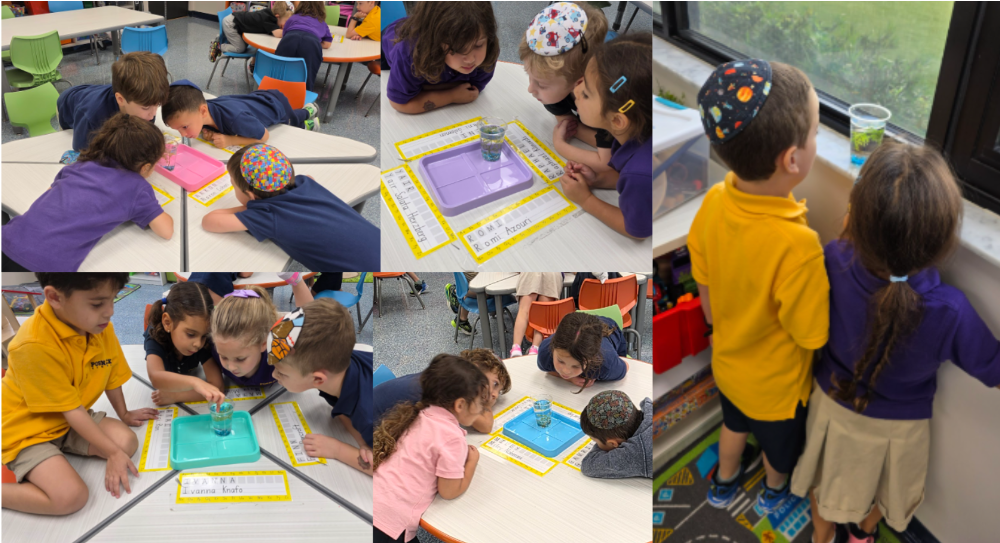
In this week’s Junior K. science class, our young scientists explored the differences between living and nonliving things. We talked about how living things can move on their own, eat, drink, and breathe, while nonliving things cannot. The children practiced taking deep breaths together to understand what it means to breathe; to inhale and exhale.
Next, we compared a variety of objects—some living and some nonliving—to see which characteristics applied to each. This helped students think critically and observe carefully.
At the end of our discussion, I proposed a thought-provoking question: “Do plants breathe?” To find out, we conducted a simple lab experiment using aquatic plants and sunlight. The students watched closely as the underwater plants produced tiny bubbles—evidence of oxygen being released during photosynthesis. This hands-on investigation helped them see that plants are indeed living things that “breathe” in their own way.
The plants now remain a fixture in our classroom, allowing students to continue observing the breathing process of plants over time. They are very excited to check on them each day!
Meanwhile, in Kindergarten:
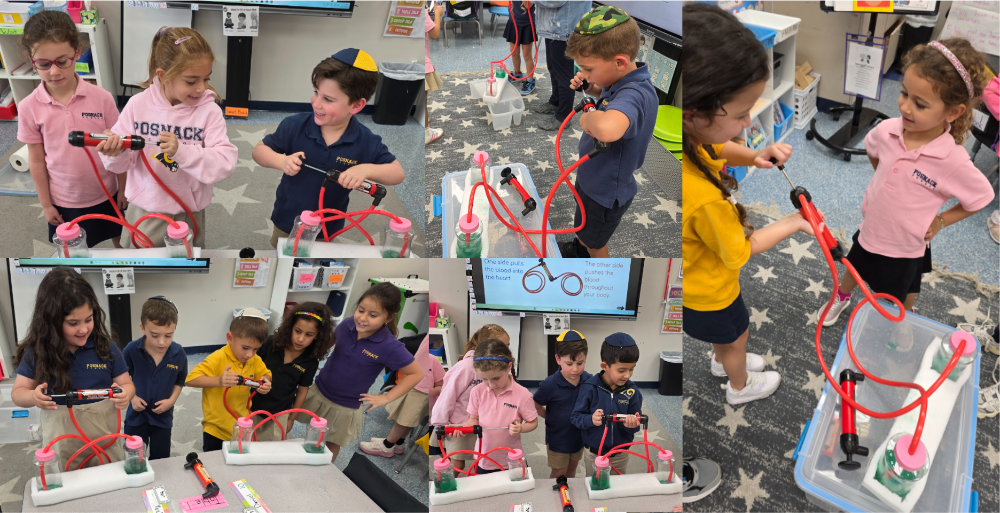
This week in science, our Kindergarten students continued their learning from last week’s lesson on plants by exploring animals and how they are similar and different. We discussed how both plants and animals breathe and drink water, and then focused on how our own lungs and heart help keep us alive and healthy.
Students used their sense of touch to feel their heartbeat while standing still. Then, after running in place, they felt again—this time noticing how their hearts beat faster! We talked about how the heart speeds up when we move because our bodies need more oxygen.
To better understand where the familiar “thump thump” sound and feeling come from, we explored how the heart works as both a pull and push pump. Using a hand water pump, students watched and practiced how the pump first pulls (the first thump) water from one cup and then pushes (the second thump) it into another.
This hands-on activity helped students visualize and feel how the heart’s two-part pumping action moves blood through our bodies—just like the pump moves water. The class had a wonderful time exploring how their bodies work!